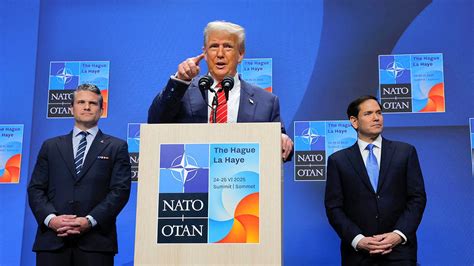
Trump’s NATO Challenge: Unpacking Alliance Dynamics\n\n## Introduction: The Shifting Sands of Transatlantic Security\n\nGuys, let’s dive right into something that’s been a
hot topic
for years:
Donald Trump’s relationship with NATO
. It’s not just a political talking point; it’s about the very foundation of global security and the
transatlantic alliance
that’s kept us safe for decades. When Trump stepped onto the world stage, he brought a totally fresh, and often
disruptive
, perspective to international relations, and NATO was squarely in his sights. From the get-go, his rhetoric signaled a major shake-up, making everyone wonder what the future held for this crucial pact. His presidency truly put the alliance under a microscope, forcing member states to re-evaluate their commitments and roles.\n\nMany of us remember the headlines, the tweets, and the speeches that constantly questioned the fundamental principles of the North Atlantic Treaty Organization.
Donald Trump
consistently challenged the existing framework, pushing for what he called a “fairer” distribution of defense burdens among member states. He often portrayed the United States as bearing too much of the financial load, with European allies seemingly enjoying a “free ride.” This wasn’t just about money; it was about a fundamental reassessment of the
mutual defense pact
and the
shared responsibilities
that underpin it. His approach sent ripples across Washington and Brussels, sparking intense debates about the alliance’s relevance, its funding models, and its strategic direction in a rapidly changing geopolitical landscape. It was a wake-up call, demanding a more proactive and accountable stance from all members, especially those who had, perhaps, become a bit complacent over the years.\n\nThis article isn’t just a recount of events; it’s an exploration of the
profound impact
that
Donald Trump’s presidency
had on NATO. We’re going to unpack the key themes that defined his engagement with the alliance, from his insistence on increased defense spending to his questioning of its very utility. We’ll look at how his demands were received, the changes they prompted (or didn’t prompt), and the lasting legacy of his time in office. It’s crucial to understand these dynamics because they continue to shape the ongoing dialogue about
transatlantic security
and the future of collective defense. So, buckle up, because we’re about to explore how one leader’s unique vision challenged an institution built on seventy years of collaboration and mutual trust. His era, quite frankly, left an
indelible mark
on the alliance, pushing it to adapt and reflect on its core mission in ways few expected. The debates he ignited still resonate today, shaping how we think about
international cooperation
and the responsibilities of
global powers
in maintaining peace and stability.\n\n## The “Fair Share” Mantra: Unpacking Defense Spending\n\n
Donald Trump’s
most consistent and resounding call regarding
NATO
was his insistence on
allies paying their fair share
. This wasn’t just a casual remark; it was a cornerstone of his foreign policy, repeated endlessly in speeches, press conferences, and tweets. He specifically hammered home the
2% GDP defense spending target
, a commitment that NATO members had agreed upon in 2014, but many had yet to meet. Trump saw this as a clear indication of European nations freeloading off American generosity and military power. He argued that the U.S. was disproportionately funding the alliance, while other wealthy nations were lagging, effectively enjoying the security umbrella provided by American taxpayers without contributing adequately themselves. This perspective, though blunt, undeniably sparked a much-needed conversation within the alliance about accountability and resource allocation.\n\nHis rhetoric around
financial contributions
was often
incendiary
, leading to some pretty tense summits and bilateral meetings. He’d frequently single out specific countries, publicly shaming them for not meeting the 2% threshold. While this approach was widely criticized by traditional diplomats, it undeniably had an effect. Many European nations, spurred by the direct pressure from the American president, began to increase their defense budgets. The data shows a tangible uptick in spending across the alliance during his term, with more members beginning to move towards or even surpass the 2% target. This was a direct result of Trump’s unwavering focus on this particular metric. He essentially weaponized the spending target, turning it from a loose guideline into a non-negotiable demand, which fundamentally altered the dynamics of
burden-sharing
discussions within NATO.\n\nHowever, the concept of a “fair share” isn’t just about a simple percentage of GDP. It also involves the
types of contributions
allies make, their
participation in operations
, and their
strategic capabilities
. Critics argued that Trump’s narrow focus on the 2% figure overlooked these broader contributions, such as hosting U.S. bases, providing crucial intelligence, or contributing specialized military units to NATO missions. For instance, countries might invest heavily in cybersecurity, logistics, or humanitarian aid, which are all vital to collective security but don’t always translate directly into the 2% defense spending metric. Nevertheless, Trump’s persistent demands did force allies to confront their own spending habits and justify their defense policies. It made them think hard about their commitments and whether they were genuinely pulling their weight in maintaining the
collective security
of the alliance. This
intense scrutiny
undoubtedly strengthened the argument for greater financial transparency and accountability, even if the method was unconventional. The legacy of his push for
increased spending
continues to shape budgetary discussions among
NATO members
, long after his presidency, ensuring that the issue of
defense investment
remains a priority for the alliance as it navigates new and complex global threats.\n\n## Challenging Article 5: The Sacred Cow Under Scrutiny\n\nBeyond the financial debates,
Donald Trump
also sparked considerable alarm by occasionally questioning the sanctity of
Article 5
of the
NATO
treaty. For those not deep into diplomatic jargon,
Article 5
is the cornerstone of the alliance – the legendary “one for all, and all for one” clause. It states that an attack against one member is an attack against all, triggering a
collective defense response
. It’s the ultimate mutual security guarantee, the bedrock upon which NATO’s credibility rests. When Trump, as a presidential candidate and later as president, expressed doubts about automatically coming to the aid of an attacked ally who hadn’t met their defense spending commitments, it sent shivers down the spines of European leaders and security analysts. This wasn’t just talk; it was a direct challenge to the very soul of the alliance.\n\nHis reluctance to unequivocally endorse
Article 5
in his early presidency was seen by many as a dangerous weakening of the
transatlantic bond
. It created an atmosphere of
uncertainty
and
distrust
, particularly among Eastern European allies who viewed Article 5 as their primary deterrent against potential aggression. Imagine being a small nation bordering a powerful, potentially hostile neighbor, with your security explicitly guaranteed by the world’s strongest military alliance, only to hear the leader of that alliance cast doubt on that promise. That’s a huge deal, guys. It threatened to unravel decades of collective security policy and raised serious questions about the
credibility of NATO
itself. The fundamental premise of the alliance — that
an attack on one is an attack on all
— seemed, at times, to be conditional in Trump’s eyes, contingent upon meeting financial obligations.\n\nTo be fair, senior U.S. officials and diplomatic allies often worked overtime to reassure partners that the U.S. remained committed to
Article 5
. Secretary of State Mike Pompeo and Secretary of Defense James Mattis, for example, consistently reiterated America’s unwavering dedication to the
collective defense principle
. However, the mere fact that such reassurances were necessary highlighted the
strain
Trump’s rhetoric placed on the alliance. It demonstrated how a president’s words could have
profound psychological and strategic implications
, even if the formal policy remained unchanged. The episode served as a stark reminder that
trust
and
unity
are not just abstract ideals but crucial elements of effective deterrence. While Trump eventually offered clearer affirmations of Article 5 later in his term, the initial ambiguity left a lasting impression, forcing allies to confront the possibility of a less predictable American commitment. This period undoubtedly reinforced the importance of
strategic autonomy
for European nations and the need for
internal cohesion
within NATO, even as they navigated a shifting relationship with their most powerful member. The episode underscored the fragility of
international agreements
when faced with populist challenges and highlighted the enduring need for strong, consistent leadership within alliances to maintain their deterrent power and collective resolve.\n\n## Impact on Transatlantic Relations: A Shaky Foundation\n\n
Donald Trump’s
tenure had a truly
unforgettable impact
on the broader
transatlantic relationship
, which is the vital link between North America and Europe. It wasn’t just about defense spending or Article 5; it was about a fundamental shift in tone and approach that strained diplomatic ties and fostered an environment of
unprecedented uncertainty
. His “America First” doctrine, while appealing to a segment of his domestic base, often translated internationally into an
“America Alone”
sentiment, leading to significant friction with traditional European allies. The casual dismissal of long-standing diplomatic norms, the public criticism of allied leaders, and the questioning of multilateral institutions created a palpable sense of unease and, frankly,
resentment
across the Atlantic. This wasn’t just political theater; it was a tangible shift in how leaders interacted and perceived each other, moving away from a spirit of mutual respect and towards a more transactional, often confrontational, dynamic.\n\nThis
strain on diplomatic ties
manifested in various ways. There were moments of very public disagreement on issues ranging from climate change (the Paris Agreement) and trade tariffs to the Iran nuclear deal. European leaders, accustomed to close coordination and consultation with Washington, found themselves navigating a U.S. administration that often prioritized unilateral action over multilateral consensus. Figures like German Chancellor Angela Merkel and French President Emmanuel Macron increasingly spoke of the need for
European strategic autonomy
, essentially suggesting that Europe needed to be more self-reliant in its defense and foreign policy, rather than solely depending on the U.S. This wasn’t necessarily a rejection of the alliance, but rather a recognition that the world, and America’s role in it, was changing, and Europe needed to adapt. This proactive stance by
European leadership
was a direct consequence of the perceived unreliability and unpredictability emanating from Washington, forcing them to consider scenarios where American leadership might not be as steadfast as it once was.\n\nDespite the rhetoric, cooperation didn’t entirely vanish. There were still areas where the U.S. and its European allies continued to work together, particularly on counter-terrorism efforts and certain intelligence-sharing initiatives. The underlying bureaucratic and military-to-military ties often endured, even when political leaders were at odds. However, the overall atmosphere was one of
heightened tension
and a constant need for damage control. The
transatlantic bond
, once considered almost unbreakable, felt significantly weaker. The sense of shared values and common purpose, which had been a hallmark of the post-World War II order, seemed to erode under the weight of conflicting national interests and a transactional approach to alliances. It forced many to reflect deeply on the nature of international partnerships and the enduring strength of multilateralism. The period under Trump demonstrated that even the most robust alliances require consistent nurturing, mutual respect, and a shared vision to thrive in a complex
global security environment
, and any deviation from these principles can quickly lead to fragmentation and uncertainty for the entire global order.\n\n## The Legacy and Moving Forward: NATO’s Enduring Resilience\n\nSo, after all the drama and disruption, what’s the
long-term impact
of
Donald Trump’s presidency
on
NATO
? That’s the million-dollar question, guys. One thing is for sure: his time in office forced the alliance to look hard in the mirror and re-evaluate its core purpose and commitments. While his tactics were often abrasive, many observers credit him with jump-starting the conversation around
defense spending
in a way that previous administrations hadn’t. The numbers don’t lie: defense budgets across Europe did see a noticeable increase, with more allies moving towards the 2% target. So, in that specific regard, his demands did lead to some
tangible changes
in
defense spending
, pushing allies to take their financial commitments more seriously. This emphasis on
burden-sharing
has become a permanent fixture in NATO discussions, ensuring that allies continue to be accountable for their contributions to collective security.\n\nHowever, these gains came at a cost. The constant questioning of
Article 5
and the general erosion of trust had a
detrimental effect
on the
alliance’s cohesion
and
diplomatic relations
. The perception of the U.S. as an unpredictable partner introduced an element of
strategic uncertainty
that continues to linger. It challenged the assumption that American leadership in global security was an unshakeable constant, prompting European nations to seriously consider developing greater
strategic autonomy
. This introspection, while potentially beneficial in the long run for a more balanced alliance, initially generated considerable anxiety and diverted attention from other critical geopolitical challenges.\n\nDespite the significant strains,
NATO’s resilience
ultimately prevailed. The alliance, often described as the most successful military pact in history, proved its adaptability. It absorbed the shocks, continued its missions, and perhaps even emerged stronger in some respects, having been forced to confront its internal weaknesses and reaffirm its foundational principles. The challenges posed by Trump’s presidency, ironically, may have reminded member states of the
indispensable value
of
collective defense
and the necessity of maintaining a united front against evolving threats. Looking ahead, NATO still faces immense challenges, from a resurgent Russia and the rise of China to new domains of warfare like cyber and space. The experience of the Trump years has likely strengthened the resolve of the alliance to adapt, innovate, and maintain its relevance in a complex and often dangerous world. The ability of NATO to navigate such a tumultuous period and emerge intact speaks volumes about its enduring strength and its
vital role
in
global security
. The lessons learned about leadership, solidarity, and the critical importance of
shared values
will undoubtedly inform how the alliance tackles the
geopolitical landscape
of the future, ensuring its continued capacity to deter aggression and protect its members for generations to come.
