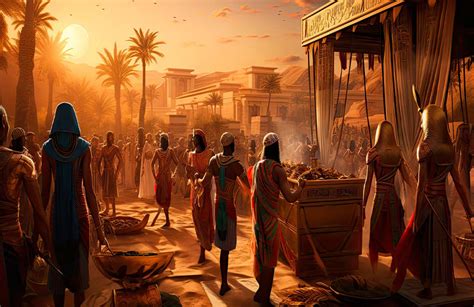
Unveiling Ancient Egyptian Pyramids: Secrets & HistoryHey guys, ever looked at a picture of the
Ancient Egyptian Pyramids
and just thought, “
Whoa, how did they even do that?!
” Seriously, these monumental structures aren’t just piles of old stones; they’re incredible testaments to ancient ingenuity, spiritual belief, and some seriously hard work. For thousands of years, the
Ancient Egyptian Pyramids
have captivated our imaginations, standing tall against the sands of time and whispering tales of pharaohs, gods, and a civilization obsessed with the afterlife. We’re talking about structures so precise, so massive, and so enduring that they still puzzle engineers and historians today. From the very first experiments with pyramid building to the grand, iconic pyramids of Giza, each stone tells a story of an advanced society with a profound understanding of architecture, astronomy, and organization. These aren’t just tombs; they’re cosmic maps, eternal homes, and symbols of ultimate power.In this epic journey, we’re going to dive deep into the world of the
Ancient Egyptian Pyramids
. We’ll explore their mysterious origins, unravel the fascinating stories of the pharaohs who commissioned them, and even try to get our heads around the mind-boggling construction techniques used thousands of years ago,
without
modern machinery. We’ll chat about why these massive structures were built in the first place—what spiritual significance did they hold for the ancient Egyptians? And what kind of society was capable of such incredible feats? So buckle up, history buffs and curious minds, because we’re about to embark on an adventure into one of humanity’s most enduring and impressive architectural marvels. These pyramids, especially the famous ones near Cairo, have spurred countless theories, from alien involvement (come on, guys, probably not!) to hidden chambers and curses. But what’s really important is understanding the genuine human story behind their creation—the sweat, the tears, the brilliant minds, and the deeply held beliefs that drove a civilization to build monuments that still inspire awe today. We’ll break down the timelines, the key figures, and the sheer
ambition
that defined this incredible era of ancient history, making sure to highlight the most intriguing aspects that continue to fascinate us all. Are you ready to uncover the secrets? Let’s go!# The Dawn of Pyramid Building: Early Innovations
Ancient Egyptian pyramid
construction didn’t just pop up overnight with the Great Pyramid of Giza, guys. Oh no, the journey to those iconic triangular shapes was a long, fascinating evolution, starting with much simpler structures. The very first true
Egyptian pyramid
builders were actually experimenting for centuries, slowly refining their techniques and designs. It all kicked off around 2700 BCE, during Egypt’s Early Dynastic Period and the Old Kingdom, with structures known as
mastabas
. Think of a
mastaba
as a large, rectangular, flat-topped mud-brick building with sloping sides. These were the standard tombs for the pharaohs and high-ranking officials before the pyramid concept really took hold. They had an underground burial chamber and an above-ground chapel for offerings to the deceased. It was a good start, but the Egyptians, being the ambitious builders they were, clearly wanted something more grand, something that would literally reach for the heavens.Enter
King Djoser
of the Third Dynasty and his visionary chief minister, the legendary
Imhotep
. These two guys are seriously important because they kick-started the true
pyramid
revolution. Imhotep, often considered the world’s first multi-talented genius (he was an architect, physician, and high priest, among other things!), had a groundbreaking idea. Instead of just one
mastaba
, why not stack several
mastabas
of decreasing size one on top of the other? And instead of mud-brick, why not use stone? This brilliant concept led to the creation of the
Step Pyramid at Saqqara
, often hailed as the world’s first monumental stone building. This incredible structure, rising in six massive steps, was a complete game-changer. It wasn’t just a tomb; it was a powerful statement of Djoser’s divinity and an architectural marvel that paved the way for all future pyramids. The Step Pyramid complex was truly massive, surrounded by an enclosure wall and featuring various ceremonial courts and chapels, all built from stone. It represented a huge leap in
construction techniques
and
architectural ambition
for the ancient Egyptians.Building the Step Pyramid was a massive undertaking, showcasing a new level of social organization and resource management. The sheer amount of stone quarried, transported, and precisely placed was unprecedented. This project essentially laid the groundwork for the more refined and geometrically perfect pyramids that would follow. After Djoser, other pharaohs tried their hand at pyramid building, sometimes with less success. For example,
King Sneferu
, Khufu’s father, from the Fourth Dynasty, was a true innovator and tried to perfect the smooth-sided pyramid. He built three significant
pyramids
: the
Meidum Pyramid
, the
Bent Pyramid
, and the
Red Pyramid
. The Meidum Pyramid started as a step pyramid but was later converted into a true pyramid, though it partially collapsed, showing the learning curve involved. The Bent Pyramid, located at Dahshur, is famous for its unique angle change halfway up – a clear sign that the engineers realized their initial angle was too steep to sustain the weight of the structure. Finally, Sneferu achieved success with the Red Pyramid, also at Dahshur, which is considered the first true smooth-sided pyramid. These early
Egyptian pyramids
were crucial testing grounds, teaching the ancient builders invaluable lessons about angles, structural integrity, and the logistics of moving colossal amounts of stone. Without these initial
innovations
and
experiments
, the majestic pyramids of Giza simply wouldn’t have been possible. It was a period of trial and error, but one that ultimately led to some of the most enduring wonders of the ancient world. The lessons learned during Sneferu’s reign, especially regarding the stability of different angles and the sheer volume of material needed, directly informed the planning and execution of the even grander projects that were just around the corner. These early pyramids, though perhaps less famous than Giza, are
crucial
to understanding the full scope of
Ancient Egyptian pyramid
development. They represent the intellectual curiosity and persistent efforts of a civilization striving for monumental achievements. # The Golden Age: Giza and BeyondAlright, guys, now we’re getting to the really iconic stuff – the
Ancient Egyptian Pyramids
of Giza! This period, roughly spanning the Fourth Dynasty (around 2580-2560 BCE), is often referred to as the
Golden Age of pyramid building
. It’s when the ancient Egyptians truly perfected their craft, culminating in some of the most awe-inspiring structures humanity has ever created. And leading the charge were three legendary pharaohs: Khufu, Khafre, and Menkaure. The most famous of them all, of course, is the
Great Pyramid of Giza
, built for
Pharaoh Khufu
. Seriously, picture this: for over 3,800 years, this bad boy was the tallest man-made structure in the world! It’s an absolute marvel of ancient engineering and still largely a mystery in terms of its exact construction. Made of an estimated 2.3 million massive stone blocks, each weighing several tons, it stands as a testament to the immense power and organizational capabilities of the Fourth Dynasty pharaohs. The sheer scale is almost incomprehensible when you consider the technology available at the time. To put it simply, the Great Pyramid wasn’t just big; it was
enormously
big, meticulously aligned with cardinal points, and constructed with incredible precision.Following Khufu’s masterpiece, his son,
Pharaoh Khafre
, commissioned the
second largest pyramid at Giza
. While slightly shorter than Khufu’s, Khafre’s pyramid appears taller due to being built on a higher bedrock. It’s also famously associated with the enigmatic
Great Sphinx
, a colossal limestone statue with the body of a lion and the head of a pharaoh (believed to be Khafre himself). The Sphinx is another mind-blowing testament to the artistry and spiritual beliefs of the ancient Egyptians, standing guard over the Giza plateau. The intricate details of the Sphinx’s carving, its sheer size, and its enduring mystery only add to the allure of the
Giza pyramids
. Together, Khafre’s pyramid and the Sphinx create an unforgettable landscape that has fascinated travelers and scholars for millennia.Completing the trio is the
pyramid of
Pharaoh Menkaure
, the smallest of the three main Giza pyramids. While not as massive as its neighbors, it’s still an impressive structure, originally clad in beautiful red granite, much of which has been stripped away over the millennia. Each of these
Ancient Egyptian Pyramids
wasn’t just a standalone structure; they were part of larger complexes, including temples, smaller satellite pyramids for queens, and extensive cemeteries for nobles and officials. These
pyramid complexes
were bustling centers of activity, requiring a huge support infrastructure of priests, administrators, and workers. The whole Giza plateau was essentially a monumental city dedicated to the afterlife, carefully planned and executed over decades.The construction of these
Giza pyramids
sparks endless debate. While some theories lean towards ramps, others suggest internal ramps or even lever systems. What we do know is that a massive, highly organized workforce – not slaves, as often misrepresented in Hollywood, but skilled craftsmen, farmers, and laborers – was mobilized for these projects. They lived in purpose-built villages, were fed and housed, and worked in rotation, seeing their contributions as a spiritual duty to their divine pharaoh. The logistics involved in quarrying, transporting across the Nile, and precisely placing millions of tons of stone were nothing short of extraordinary. The legacy of Giza isn’t just in the stones themselves, but in the enduring mystery and the sheer scale of human achievement they represent. Even today, the
Ancient Egyptian Pyramids
of Giza continue to draw millions of visitors, inspiring awe and reminding us of the incredible power and vision of an ancient civilization. They stand as an
unrivaled peak
in ancient architecture, a pinnacle that has rarely, if ever, been surpassed in terms of combined scale, precision, and longevity. Seriously, guys, just thinking about the effort involved in building these things makes your head spin. It’s truly the epitome of ancient human endeavor. The detailed planning, the astronomical alignments, and the sheer labor force involved make Giza not just a site of ancient tombs but a monument to human organizational genius. # Purpose and Symbolism: Why Build Pyramids?So, you’re probably asking,
